Facilitation, Positive Psychology

Working With Strengths: A Practical Guide for Trainers & Coaches

Working With Strengths: A Practical Guide for Trainers & Coaches
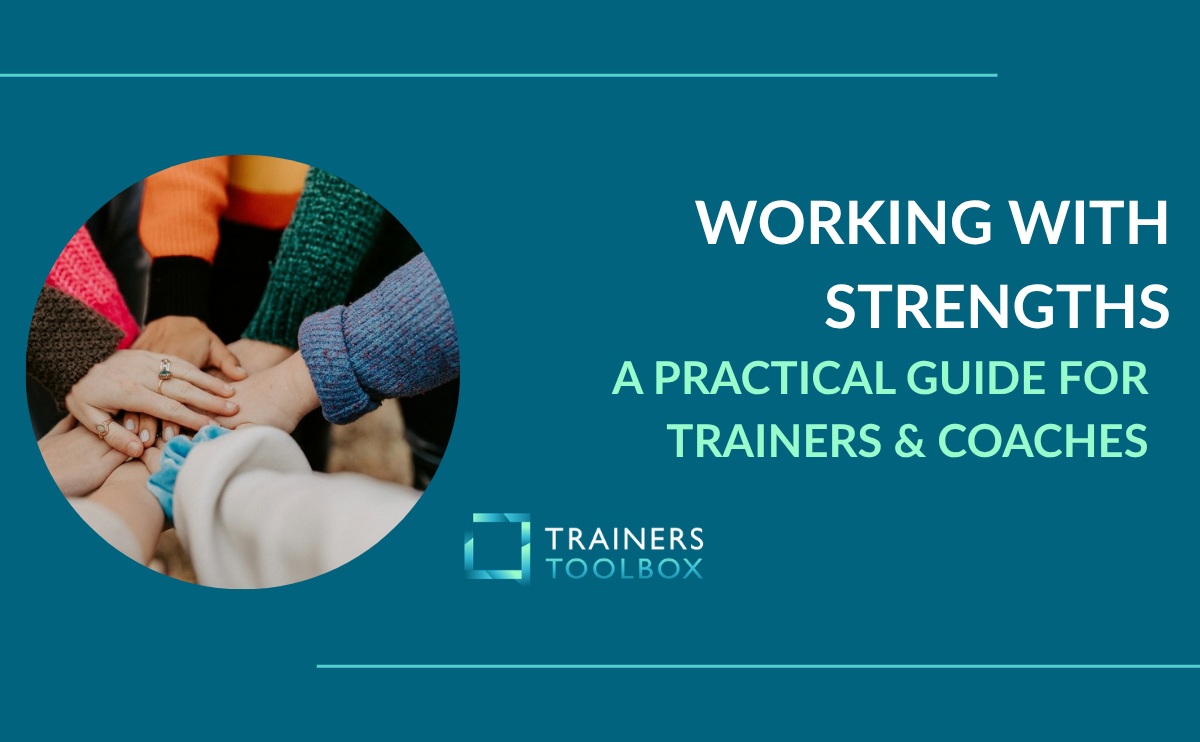
Everything a trainer or coach needs to work with strengths in your workshops & trainings: tools & approaches to help people not just discover but truly use their strengths

As a trainer, facilitator or coach, you probably had an experience of how powerful it can be when strengths shine: seeing that moment when someone realises what they are genuinely good at, and how something opens up in them.

So how do you put strengths to work in your workshops more, in an active, practical way?

How do you incorporate more of strengths into a workshop, a coaching conversation, a team session, in a way that changes something?

How do you go beyond handing someone a nice list of strengths from their assessment that they will have forgotten by next week, and really make those strengths work for them?

That is what this guide is for.

What a strengths-based approach actually is

A strengths-based approach means shifting our focus from what is wrong and what we need to “fix” to what we are already good at, and how we can harvest more of it.

Working with strengths sits at the heart of positive psychology, the science of wellbeing & flourishing.

It is one of the most versatile, practical, usable parts of the whole positive psychology toolbox, especially as it can be included across many training & self-development topics.

But let’s start from the beginning…

What a strength actually is (and how is it different from a skill?)

A strength is defined by three characteristics:

  • something you’re good at
  • something you enjoy doing
  • it gives you energy when you engage with it

That third one is what separates a strength from a skill.

You can be really good at something that leaves you drained by the end of the day – which would be a characteristic of a skill you have learned, not a strength that is an authentic part of you. Both are worth spotting (and using!), both in yourself and in the people you work with.

On the other hand, strengths have that energizing, authentic power to lift you up and to create your best work.


How strengths work in almost any topic you train

The strengths-based approach is not one narrow tool or one narrow topic. It is an approach that you can use in a versatile way across many workshop (or coaching) topics.

While this guide is written for trainers and facilitators, it is just as powerful when used inside an organisation.

If you are in L&D, leading a team, or supporting people in any way, the same routes and exercises further in the article, work exactly as they are. (and feel free to get in touch if you need help figuring out how).

Once you know how to help someone find and use their strengths, it becomes a powerful toolbox that you can include over a surprising range of your work:

  • Leadership: A leader who works from their strengths, and learns to grow their people’s strengths, builds trust far faster & makes his leadership way more motivating and energizing than one working down a list of gaps.
  • Teamwork and team development: Map out who brings what, and a team stops draining energy and unleashes intense motivation. They also get to understand and support each other much better when aware of each other’s strengths – and also appreciate each person’s contributions more.
  • Building a personal brand or writing a CV: Having a new vocabulary of what their strengths are gives people words to describe themselves that are both true and distinctive, which is exactly what a personal brand needs. They allow you to verbalize your impact in a whole new way.
  • Communication: Knowing your communication style advantages and your stretch zones changes how you show up in hard conversations. It gives you a whole set of new options to use in your conversations, while making you more aware of traps to avoid.
  • Presentation skills: Unleashing your authentic strengths in your presentations (instead of using a generic way to develop your skills as a “good presenter”) makes all the difference in how memorable and energizing your presentations become. When you step in that authenticity, your confidence grows, and the audience also appreciates your talk having a bit of “personality” and connects better.
  • Energy management and burnout: Working from your learned skills, or overusing one of your strengths until it wears you down, is a quiet route to burnout. Strengths are not just at the core of our success and performance, but also at the core of how we manage our energy and how we keep resourceful.
  • Wellbeing: Using your strengths links to more sense of meaning, deeper engagement in things we do and creates more of positive emotions.

When you learn a strengths-based approach, you are not learning one tool. You are learning principles and tools you can plug into all of these contexts, and in many more.

And the best part: it brings a fresh charge of energy and motivation into each of these contexts.

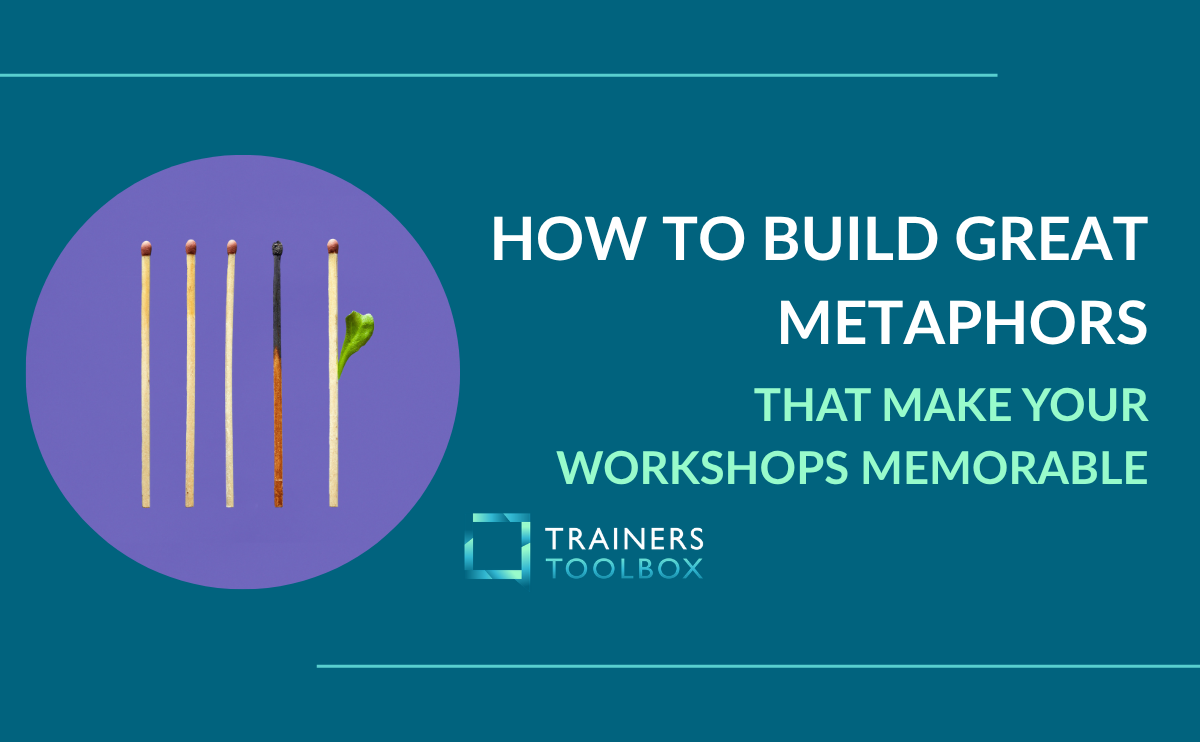
My favorite metaphor to make working with strengths more engaging & intuitive

You can explain the strengths-based approach with a list of what the research says about the benefits of using strengths more, and people find it interesting & motivating.

Yet, the moment I use a metaphor to convey the same point, eyes open up and participants suddenly get much more curious and excited about the idea.

My favorite metaphor when working with strengths is the sailboat one. It goes like this:

Sailboat metaphor for working with strengths: the sails are your strengths, the leaks in the hull are your weaknesses

Picture yourself as a boat moving through your life. The sails are your strengths. The hull (the body of your boat), as any boat, has a few leaks, and those are your weaknesses.

Which one will you focus on? Will you keep patching the leaks forever, missing out on using the sails? Or will you patch the leaks just enough to stay afloat, and then focus on the sails that actually move you forward? Sails are where the energy, joy, and forward momentum lie – and whenever we can, that is where we wanna focus!

Yet, so many of us spend all our time down in the hull hunting for leaks, while the sails sit there neglected.

It is a powerful image that you can use to demonstrate the core of the whole strengths-based approach.

I do invite you to use this powerful metaphor with your own participants – you can explore it way deeper in the following resources I prepared for you:

The first step: How to help people discover their strengths

Discovery is the first step in the strengths-based approach. It’s where the work begins – but it shouldn’t be where it ends!

To discover more about your own strengths, there is no single right route, and there might be different options in different contexts.

What I usually recommend is combining 3 aspects of strengths discovery:

  • self-reflection with meaningful questions,
  • asking others for feedback, and
  • doing one of the strengths assessments.

Then put all 3 things on the same pile, and take that list back to self-reflection.

Here are all the different approaches and tools that you can use when working on someone’s strengths discovery (for each approach I share the first step you can use straight away):

Reflect & self-observe

Notice energy and flow. Pay attention to when you (or observe it in someone else, depending on whose strengths you are discovering) come alive, get energised, lose track of time, or do something that feels really easy.

First step: for a week, jot down the moments you feel most energised. Patterns show up fast. Also, reflect on things that you enjoy doing, are good at and get energy from.

Ask the people around you

We are often blind to our own strengths, precisely because they come so easily we assume everyone has them. Others often can see them more clearly.

First step: ask three people what they think you are genuinely great at, then notice which answers surprise you. Don’t trust just one person’s feedback, as it can be a reflection of their own lens, but look for patterns and overlaps. (You can also use metaFox’s Strengths Discovery tool for this.)

Use a strengths assessment

A good one gives people shared language and a starting list of strengths to reflect on.

First step: pick one and take it yourself before you run it with others.

Use open questions to spark exploration

Sometimes the fastest route is one good question: “What is something that comes easily to you that seems hard for others?”. You can often use similar questions in coaching that we would use for self-reflection.

Two questions I like to plant in a discovery conversation, worth trying on yourself first: What am I doing when I feel most energised? What comes so easily to me that I assume everyone can do it?

To deepen the exploration but also make it lighter and easier, you can also use some of the strengths cards or activities to support others in uncovering their strengths.

Strengths assessments at a glance

At some point, most people reach for an assessment, yet then they get overwhelmed by choice and become uncertain where to start.

Or what to do with the assessment’s results.

There are a lot of options, and it can be confusing to figure out both which assessment fits best and which actions to take after the assessment.

Strengths assessments are powerful tools but can take quite some understanding to use well, and not all of them are equally grounded in science.

Here is only the quick orientation:

  • VIA Character Strengths: Free, research-grounded, focused on character.
  • CliftonStrengths: The well-known, built on corporate environments and ideal for teams, talent, and performance-focused.
  • Strengths Profile (Cappfinity): The richest picture, and the best at separating strengths you have from ones you overuse or underuse.
  • High5: Free, fast, immediately usable, lighter than most of the others.
  • metaFox Strengths Discovery: A visual survey built for coaching, with peer feedback included.

The point is not to discover your strengths. It’s to use them.

Discovery is energising & can give us a lot of positive emotions (as well as interesting questions to get to know ourselves better).

Taking the assessment, reading your top five, recognising yourself on the page – it is a wonderful path of self-discovery.

But that is not the point of working with strengths!

That’s just the starting point.

The biggest value for our wellbeing, performance and energy is in using our strengths more, on purpose.

A strength you have named but never put more in the spotlight and action in your life changes nothing.

So here is an easy way to start:

The shortest exercise to leverage strengths more

  1. Name three to five of your strengths.
  2. Pick one to use more this week.
  3. Make a mini-plan: how, specifically, will you use it at least 3-5 times in the next seven days?

Naming, then using.

If your participants leave a strengths session having done only that, they have done the one thing that will help them to effectively (and without overwhelm) put their strengths into practice.

Using strengths in your workshops, training and coaching

In your workshops

Surface strengths early, then design the rest of the session so people use them, not just marinate in them.

The sailboat metaphor is your best friend to introduce the topic – and it can be run as a framework for the whole workshop on its own.

A question to build into your design: where in this session can each participant use a top strength on purpose?

In coaching

The “discovery-in-order-to-use” loop should be the backbone of a strengths coaching conversation. Find the strength, then spend most of the time on where and how they will use it more, with a concrete plan they leave with.

With teams

This is where a strengths-based approach shows extra impact. When a team sees who brings what, they have so much more clarity in how to work better together, and how to make that work energizing and enjoyable for every member of the team. Team strengths mapping is one of the most powerful sessions you can run for any team.

Just keep this in mind: a strength can also be overused, and when it is, it starts to work against the person.

(Explore the trap of overusing our strengths in the podcast episode on it.)

TL;DR. Too long to read? The short version of how to work with strengths as a trainer or a coach

  • A strengths-based approach means shifting focus from fixing weaknesses to harvesting what you are already good at
  • It is not a single-topic tool. It plugs into leadership, teams, communication, personal brand, presentation skills, energy management, burnout and wellbeing
  • Discover strengths by noticing energy, asking others, using an assessment, or asking one good question
  • Naming a strength changes nothing. Using it changes everything
  • Watch for overused strengths, and keep them in balance

To also explore practical tools and approaches you can incorporate in your workshops, dive in deeper with the following articles:

Want to go deeper?

If you want to work with strengths in a deep, experiential way, I facilitate The Inner Journey in Italy, a three-day experience working with images, emotions and strengths, built around live practice. Day three is all strengths.

And the strengths-based approach is exactly the kind of thing we work through in Trainers Conversations, my year-round community of trainers and facilitators.

Curious but unsure if it is the right fit? Get in touch and we can work out together whether it is.

So, which of your own strengths will you actually put to work this week, and where?

author-avatar

About Mirna Šmidt

Trainer & facilitator with 18+ years of experience. Founder of Trainers Toolbox & Happiness Academy. On a mission to help trainers create deep, science-based learning experiences that actually stick. Let's connect on LinkedIn: https://www.linkedin.com/in/mirnasmidt/