Blog
The Quickest Way to Make Any Story More Memorable
An easy, practical and colorful technique for trainers and facilitators who want their stories to be remembered long after the session ends
Think of a story you heard years ago. One that still lives in your head today.
What is it that made it stick?
Chances are, it wasn't the plot.
It wasn't the message or the lesson at the end.
It was the details.
The tiny, concrete, sensory moments that made you feel like you were there.
Sensory Details is the technique I want to share with you today.
The tiny, concrete, sensory moments that made you feel like you were there.
Sensory Details is the technique I want to share with you today.
While I work with many storytelling techniques with other trainers within Advanced Storytelling Training, I think of this one as the quickest win and the easiest way to make any story better.
You can literally transform and improve your story in under a minute with this technique. And you can even use it spontaneously while telling the story!
Enrich the sensory language in your stories
When we tell a story in a workshop or a presentation, we often default to describing what happened. The facts. The sequence. The point we're trying to make.
But our learners' brains don't remember facts.
They remember what they felt, heard, smelled, and saw. They remember those things that they were able to imagine vividly.
So instead of narrating your story in a default and ordinary way, bring it to life with sensory details, emotions, and tiny concrete moments. It will make the story more tangible, engaging, and colourful.
How sensory details bring stories to life
Here's what I mean.
Instead of: "I was nervous before the presentation."
Try: "My mouth went dry. I could hear the air conditioning humming. I kept pressing my thumb into the clicker, over and over, staring at the first slide like I'd never seen it before."
Same moment.
Completely different experience for your participants.
The first version tells us something. The second one puts us inside the story. We feel the dryness. We hear the hum. We recognise the small nervous gesture because we've all made small nervous gestures like that ourselves.
That's the shift. From re-telling about it to bringing it into the room.
The sensory cheat sheet: 6 categories to play with
You have so many more senses to incorporate in the story than you might think.
Here's a quick cheat sheet:
Visual: light, colours, shapes, faces, clothes, the room. What did the space look like? What were people wearing? What was the light like at that moment?
Sounds: voices, background noise, silence. A quiet room. A phone buzzing. The rustle of paper. The scrape of a chair being pushed back.
Body sensations: heartbeat, tension, warmth, cold, breath, that stomach drop, butterflies. This is often where the strongest emotional pull lives.
Touch & movement: textures, weight, gestures, pace, posture. Someone shifting in their seat. The weight of a folder in your hands. The cold metal of a door handle.
Scents & flavours: coffee, rain, perfume, something metallic, fresh bread. Smell is a powerful memory trigger. Even one small scent detail can transport a listener.
Emotions: name them: nervous, relieved, annoyed, proud, tense. Don't be shy about naming the emotion clearly. Sometimes the simplest word does the heaviest work.
No need to overpack it: you don't need all the senses at once
Let me be perfectly clear: You don't need to use all of these in a single story!
Even one or two well-placed sensory details can turn a flat narrative into something your participants feel in their body.
Something they remember long after the workshop ends.
The sparse version can even make it more memorable than the crowded one, as the listener can easily imagine that detail without having too many options and choices of what and how to imagine.
Pick the details that carry the most weight for the emotion or moment you want to convey.
And when in doubt where and how to add them, add them at the emotional peak - at the most important moment in your story: the moment of change, the turning point, the pause before the shift. That's where they will serve as an anchor and hold the whole story grounded.
3 questions to ask before your next story
Next time you're preparing a story for a session or a presentation, pause and ask yourself:
What did I see?
What did I hear?
What did I feel in my body?
Start there. You'll be surprised how much it changes.
Remember, done is better than perfect! Start to use this technique "quick and dirty", without overthinking, and train yourself into a habit of thinking with sensory details in mind.
You don't need to rewrite the whole story. Just add one visual detail. One sound. One sensation in the body. That's all you need to make an impact.
Want to go deeper into the art of storytelling
This is one technique. There are many more that make stories powerful.
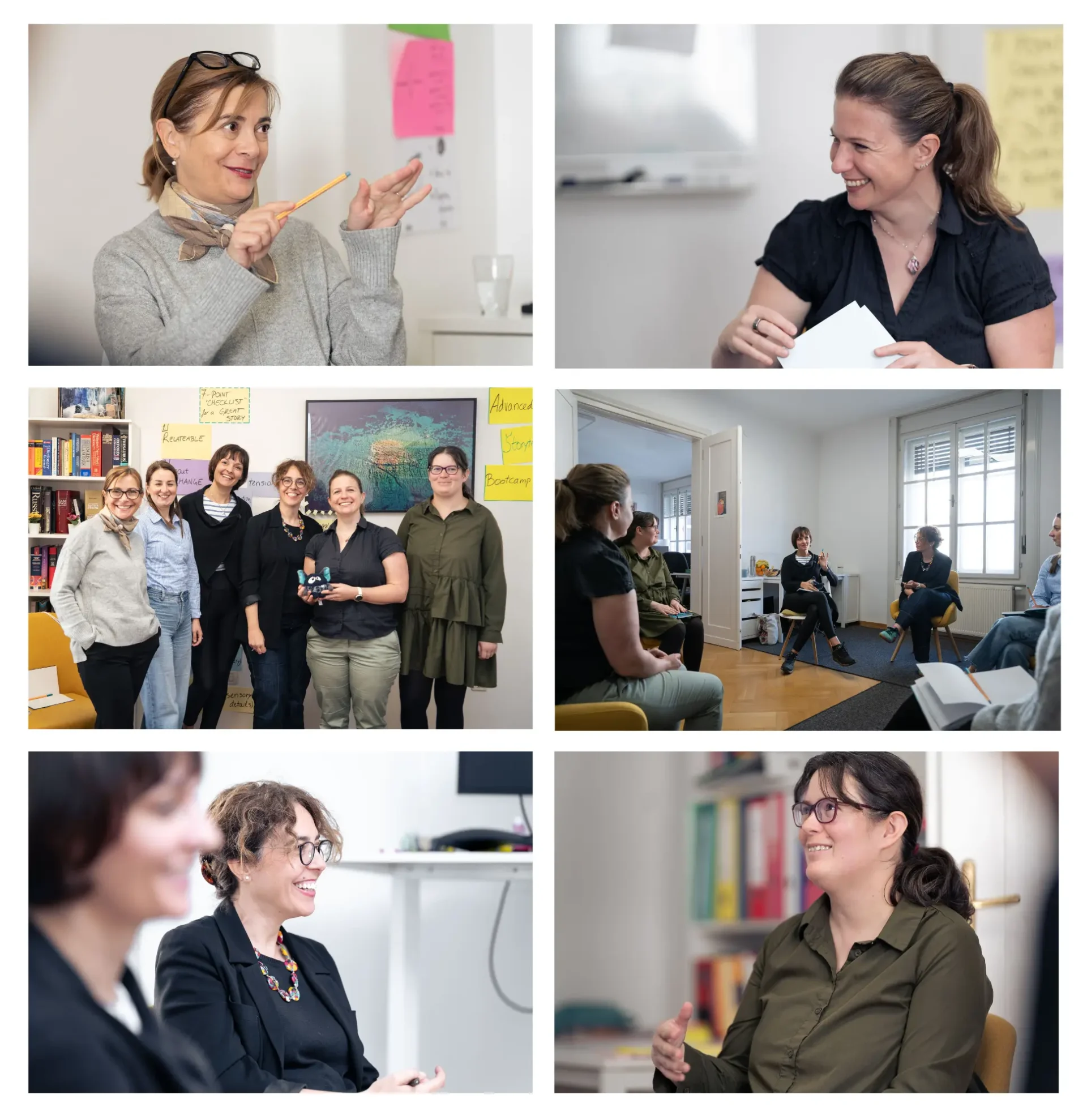
If you want to dive deeper into the art of storytelling, in a light, enjoyable & highly practical way, join me for Advanced Storytelling Training for Trainers & Facilitators.
Two immersive days of practice with 8 powerful storytelling techniques (sensory details and contrast are two of them), in a cosy group of fellow trainers and facilitators.
Two upcoming editions: Florence in October 2026 and Barcelona in March 2027.
Curious but unsure if it's the right fit? Get in touch - I would be happy to plan a short call for us to explore together if this is the right learning experience for you.
About Mirna Šmidt
Trainer & facilitator with 18+ years of experience. Founder of Trainers Toolbox & Happiness Academy. On a mission to help trainers create deep, science-based learning experiences that actually stick. Let's connect on LinkedIn: https://www.linkedin.com/in/mirnasmidt/
View all posts by Mirna Šmidt